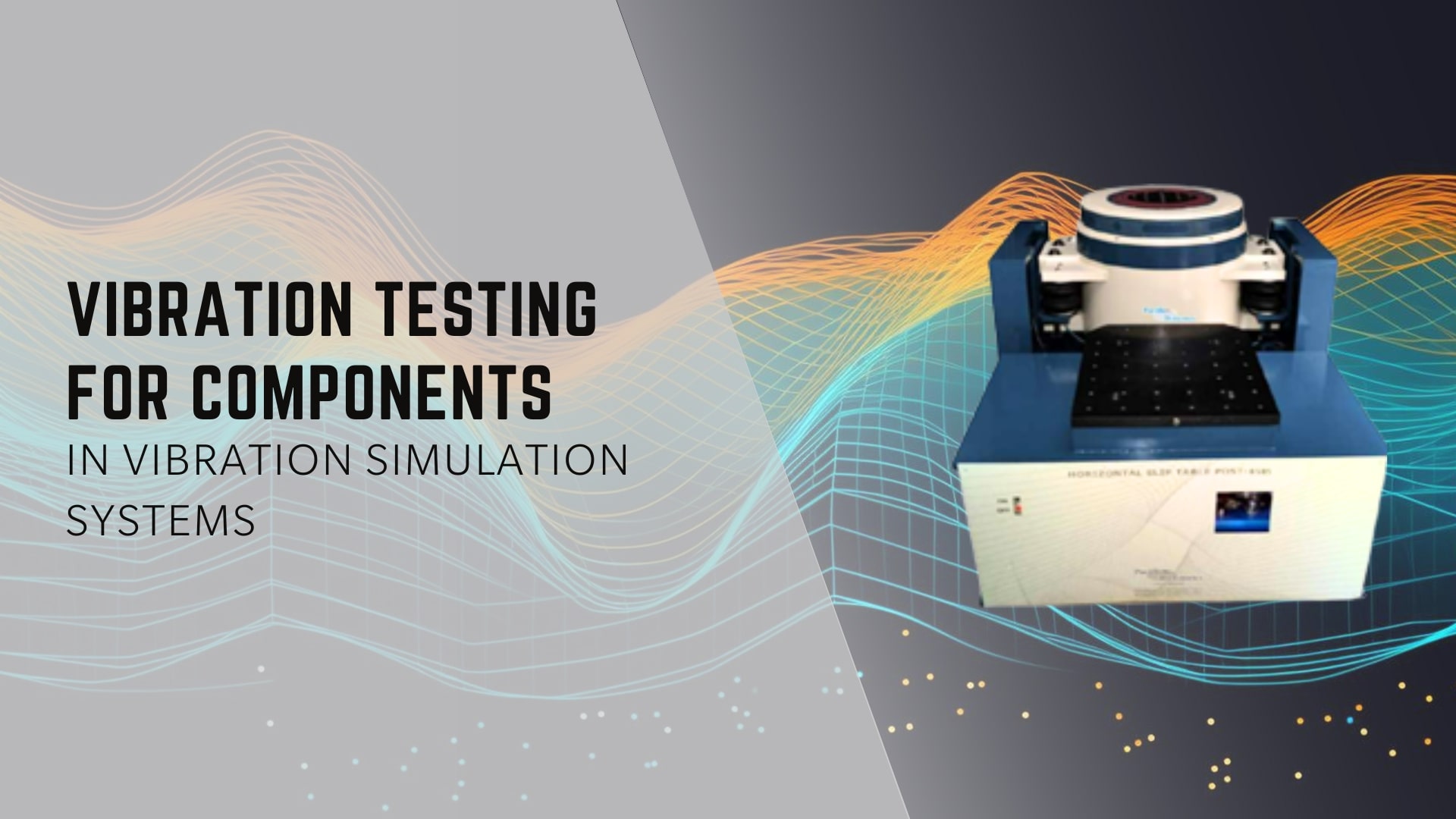
In the competitive business landscape of today, it is vital to understand if components can endure any vibration or mechanical stress before moving forward with the product development process. Vibration testing is an important part of mimicking real-world scenarios a component will experience over its lifecycle. As we know, vibration testing is imperative across automotive, aerospace, and electronics industries. Vibration simulation systems and methodologies are essential for characterizing and testing the viability of the longevity and mechanical performance of components.
Roots Metrology has advanced vibration testing services providing vibration simulation systems testing methodologies that will put your component(s) at appropriate conditions for testing. Our testing capabilities are comprehensive to provide any component testing that meets classification guidance for durability, reliability, and safety.
In the discussion to follow, we will discuss component vibration testing, vibration systems testing features, and types of tests performed at Roots Metrology
Vibration testing involves placing a component or product under simulated vibration conditions to see how it will perform in a real-world scenario. Components are then tested for their ability to accommodate the vibration they may be subject to during use, transport or operation.
At Roots Metrology, vibration simulation systems offer a high degree of accuracy in replicating real-world forces, which produce dependable results. Vibration simulation systems are composed of several types of unique systems including electrodynamic shakers, which are ultimately used to establish vibration profiles representative of continuous or random environmental conditions.
Vibration testing is important for assessing the ability of a product to meet safety and performance standards. Here are a few reasons why component vibration testing is important:
Safety and Longevity : Vibration testing tests the reliability of products to withstand the adverse effects of the processes associated with regular use. This is very important in the aerospace, automotive, and electronics sectors where reliability is paramount.
Optimized Product Performance : Vibration simulation systems can be used to optimize designs and improve performance, while at the same time ensuring that components are able to withstand environmental stresses without hindering functionality.
Cost Effective : Testing products can help determine weaknesses in the early stages of development, which could result in costly long-term implications
Compliance with Standards : Many industries have strict standards for safety and performance. Vibration testing ensures that your products comply with these regulations, helping you avoid legal and financial risks.
At Roots Metrology, we offer a range of vibration testing capabilities tailored to meet the specific needs of your products. These include:
a) Sine Vibration Test :
The sine vibration test utilizes continuous sinusoidal (smooth and continuous) vibration to assess how components respond to predictable and continuous vibrations. This test generates resonant frequencies of the component which is essential in understanding how the component will behave in the various vibration environments.
b) Random Vibration Test :
The random vibration test simulates unpredictable (randomized) vibrations that the product will experience during transportation or use. This is an essential test to determine if a product can function appropriately in a constant dynamic state and will locate problems associated with fatigue and durability.
c) Mechanical Shock Test :
The mechanical shock test simulates sudden high-level impacts that a component will experience during transportation or under operational conditions. This test is commonly used to demonstrate the durability and resistance of a component to rapid acceleration or deceleration forces.
d) Resonance Search :
The resonance search method is used to locate the natural frequencies of a component. Engineers can change designs to avoid a possible failure related to resonance once they know the resonance frequencies under realistic operational conditions
Our vibration simulation systems come equipped with advanced software features that help ensure precise testing. These include:
Swept Sine: Allows for the gradual variation of frequency during testing to observe how components respond to continuous changes in vibration.
Random : Random vibration profiles replicate real-world scenarios, providing insights into how products will perform in dynamic environments.
Shock : This software simulates high-intensity shocks that components might encounter, ensuring that they can withstand extreme forces.
RSTD (Random Shock Testing) : Combines random and shock testing to simulate complex real-world scenarios and assess the robustness of components.
Roots Metrology uses state-of-the-art vibration simulation systems with advanced technical capabilities:
These technical specifications allow us to conduct highly accurate and reliable tests across a range of applications, from small electronics to large automotive components.
Vibration testing has many applications around the world to confirm that products meet requirements for safety, durability, and performance. Some industries that use vibration testing are:
Aerospace : Aircraft and spacecraft components must withstand extreme levels of vibration during operation. Vibration testing is a method used to confirm reliable and safe critical aerospace components under extreme vibration use.
Automotive : Whether it's an engine or a suspension system, vibration testing of automotive parts ensures that parts will withstand vibration during use, contributing to a more reliable and safer product.
Electronics : Vibration testing is done with consumer electronics to assess performance under stresses, confirming that consumer electronics, such as phones, laptops, and tablets, can withstand everyday use.
Military and Defense : Military equipment face numerous environmental conditions. Vibration simulation systems are used to assess the durability of defense equipment under extreme mechanical shock and vibration for reliable and rugged performance.
Industrial Equipment : Machinery and tools in manufacturing must also endure prolonged vibrations. Mechanical stress testing is a technique that enables manufacturers to evaluate the durability, life, and reliability of industrial equipment.
Why is vibration testing performed?
Vibration testing is done primarily to recreate real-world vibration and determine how components perform in different environments. This also assists in determining weaknesses, informing design changes, and increasing reliability of the components.
What types of vibration tests are available?
Roots Metrology completes many types of vibration tests. This includes sine vibration tests, random vibration tests, mechanical shock tests, and resonance searches. Each vibration test mimics various environments or conditions to determine durability and performance of the components.
What industries use your vibration testing service?
Any component or system manufactured for industries like aerospace, automotive, electronics, military, and industrial manufacturing may require vibration tests to assure safety and performance in real-world situations.
How does Roots Metrology perform vibration testing?
Roots Metrology is an expert in the testing of components for vibration use using the most advanced vibration simulation systems. The vibration simulation system used will ensure that your
Vibration testing is an essential service that verifies your parts can endure the mechanical forces and vibrations they will experience in the field. Roots Metrology offers vibration testing services using advanced vibration simulation systems that replicate various conditions to confirm the safety, robustness, and functionality of your products. We are a trustworthy source for accurate and reliable testing to help you maximize your products' designs and specifications that meet industry standards.
