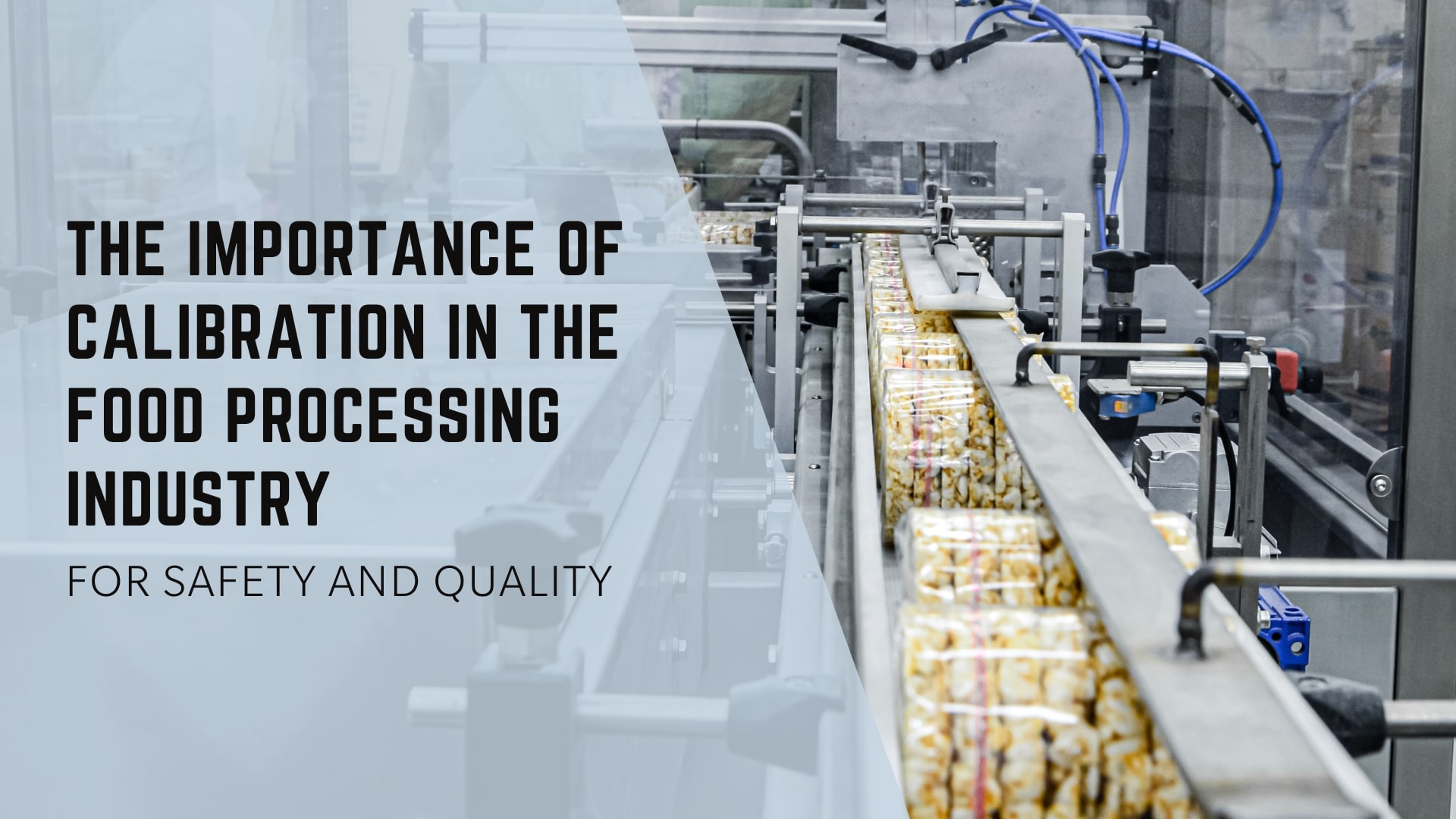
The food processing sector plays a fundamental role in providing safe, high-quality products for consumers throughout the world. Nevertheless, the food production process-whether it concerns cooking, packaging, or preservation, requires some restrictions and processes that must be adhered to in order to remain safe and guarantee quality food. To uphold food safety and quality, calibrating food processing instruments is one of the most important considerations.
Calibrating an instrument is to confirm that the instruments used on the production floor are accurate. In particular, when we are talking about calibration in the food production setting, it is to confirm that the machines, equipment, and sensors measuring the ingredients, temperature, pressure, or any other aspect of the process, are providing accurate and reliable results are consistently meet appropriate and specified standards. Instruments of any kind measuring anything inaccurately risk the food being dangerous or not meeting some sort of regulatory standard, or potentially both, all of which affects public health and industry brand.
Through this blog, we will discuss the value of food safety calibration and quality controls throughout food processing, and why accurate calibration is an essential part of food safety, maintaining product quality and compliance with regulatory standards.
Calibration of any instrument used in food processing assures precision in the reading of the instrument. The reading must be accurate for multiple reasons.
Food Safety - The most important principle in food processing is food safety. Without calibrated instruments, one is subject to contamination, spoilage, or the inability to detect harmful pathogens. Temperature, humidity, and pH must be verified as accurate since even slight deviations in foods can create unsafe situations for consumers.
Consistency and Quality - Each batch of food created should be consistent with each batch. The calibrated checks and balances in food safety are to create immediate consistency in production. Whether cooking time, ingredient ratios, or packaging pressures, calibration creates the highest quality product!
Regulations - Food safety regulations require food processors to keep stringent standards regarding health and safety. Calibration is a way of assuring the equipment is conforming to regulatory standards, thus avoiding penalties and potential recalls.
Efficiency - Regular calibrations may avoid costly malfunctions, in addition to functioning at peak performance in their functionality. A *proactive approach* may avoid a cost to an organization, time, money, and resources in the long run.
Calibration is crucial to food safety in food processing. Whether facilitating temperature control through frozen storage or making sure the correct amount of a food additive is measured, food safety calibration ensures the instruments we utilize are accurate and reliable. Many components result in food safety, including:
Temperature Control : Correct temperature measurement is the backbone of preventing bacterial growth. Calibration of thermometers and temperature measuring devices ensures food remains at a safe temperature when cooking, storing, or transporting food to reduce the chance of foodborne illness
Measuring Food Ingredients : Accuracy in measuring food ingredients for food processing is critical for consistent flavor and food safety. For example, measuring food additives and preservatives accurately is critical to ensure that they are within safe levels for human consumption.
Measuring Food Ingredients : In some food processing, accurately monitoring pressure and humidity is critical to proper cooking and food storage. Those instruments must also be calibrated properly to avoid drying out food or canning foods improperly.
Calibration of food-processing instruments is essential in quality control. By keeping instruments calibrated, food processors can ensure that every facet of production is held to a stringent level of quality. Here is how calibration impacts the quality control of food processing:
Consistency in Production:
Food processing is inherently done at a larger scale; therefore, keeping instruments calibrated ensures that every batch produced, whether it be frozen food, baked goods, or something else, is made under the same conditions, thus achieving the same taste, texture, and quality. This is vital for brands that rely on consumer trust for repeat purchases.
Compliance with International Standards :
Several different organizations around the globe have developed standards for safe food and high-quality. These organizations, including the FDA and ISO, have established standards for food safety and quality. Calibration is key to making sure that your food-processing instruments comply with these standards so that your foods can be exported and/or accepted into different markets.
Error Reduction :
Over time, as the instruments wear down, they become less accurate. Regular calibration prevents errors that could affect the product, which would require it to be thrown away or recreated. Calibration preserves the integrity of your food product and production efficiency.
Shelf Life :
Calibration of sensors and instruments also affects many of our controls in terms of shelf life. By maintaining the optimal storage conditions for perishable products, you help prevent spoilage and ensure your products reach consumers in the best possible condition.
To ensure food processing instrument calibration is carried out correctly, here are some best practices for food producers:
Calibration Is Continuous :
Calibration is not a one-off procedure; it is continuous as per the manufacturer’s guidance or industry expectations. Calibration regularly, and at the manufacturer's or industry-specified intervals, is important to ensure good readings and avoid challenges with product quality.
Utilize Certified Calibration Equipment:
Always use certified tools and equipment. Certified calibration equipment is certified to a standard meaning it has been tested to provide the highest level of accuracy and effectiveness.
Calibration History Records :
Keep records of calibration history to ensure traceability and accountability. Keeping records supports audits and inspections.
Why is food processing instrument calibration essential for food safety?
Food safety is at risk when instruments are not calibrated accurately. Proper calibration ensures that critical measurements like temperature, pressure, and ingredient quantities are precise, reducing the likelihood of contamination and spoilage.
What is the impact of calibration in food processing on food quality?
Properly calibrated instrumentation will provide product quality that remains consistent each time food is produced. Maintaining consistent cooking times, temperatures, and measurements of ingredients is vitally important in terms of safe food products with good taste and flavor.
How often should I calibrate my food processing equipment?
The frequency of calibration depends on the type of equipment, the conditions under which it operates, and manufacturer's recommendations. Typically, food processing equipment should be calibrated at least once a year or more frequently in high-use environments.
Food processing instrument calibration is an integral part of maintaining food safety, quality control, and regulatory compliance. Calibration ensures that your instruments and equipment provide accurate readings, reducing risks and ensuring consistency across production lines. It is critical for businesses in the food processing industry to prioritize regular calibration practices to avoid costly mistakes and protect both the public and the brand’s reputation.
For accurate and reliable calibration, contact Roots Metrology Calibration Lab, experts in food safety calibration and quality control.
