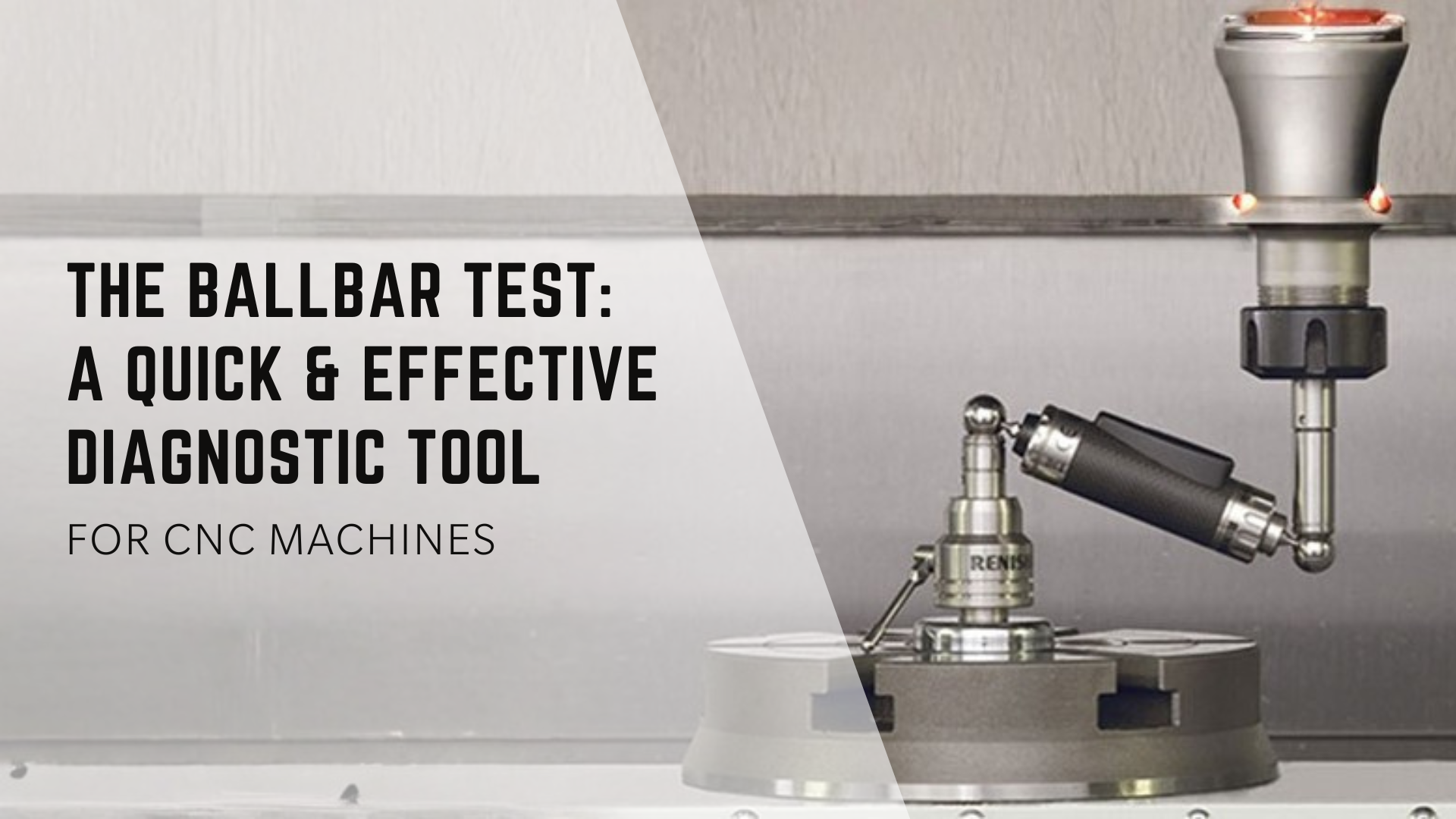
CNC machines play an important role in the Precision Manufacturing Industry, where products are manufactured with extreme accuracy. Advanced CNC machines have a tendency to experience performance-related problems as they age as a result of mechanical and servo malfunction, which produces inaccurate cutting process results, poor finishing results, and significant downtime. The use of a Ballbar Test has become an efficient and simple method to verify and evaluate the 'health' of CNC machines for this purpose.
This article will provide an overview of the Ballbar Test, and its applications in diagnosing Servo mismatch, backlash, circular interpolation, and several other aspects of CNC machine accuracy. Understanding the benefits and uses of this test will enable you to maintain the accuracy of your CNC machines for many years to come.
The Ballbar Test is a simple and precise diagnostic test for assessing CNC machine performance. Its most frequent applications are in diagnosing servo mismatch, backlash, machine squareness errors, and circular interpolation problems. This is accomplished by attaching a device called a ballbar to the CNC machine, which measures the path of the machine's tool along a circular path (for example, when milling or turning). Data obtained from the ballbar provides a way to determine what is happening with the CNC machine and compare these actual measurements with what should have happened based on the tool's programmed movements. By determining where the differences are between what happened and what should have happened, the operator can identify the problem and fix it so that the machine performs as intended.
The ballbar test is an excellent tool for helping to identify many problems that would not be immediately noticeable through routine CNC operation. Performing a ballbar test allows operators to find the problem before it impacts the quality of the workpiece and before the problem causes significant production downtime.
The Ballbar Test works by measuring the deviations that occur when a CNC machine performs circular movements. These movements are key in many machining operations, such as milling and turning. Here’s a step-by-step breakdown of how the test works:
Setup:
The ballbar is attached to the CNC machine at the spindle or tool holder. The device typically consists of a probe with a small ball attached to it, which tracks the movement of the tool along a circular path.
Measurement:
The CNC machine is then instructed to move in a circular path, while the ballbar records the deviations between the expected and actual movement. The machine is programmed to move in both clockwise and counterclockwise directions, allowing the system to assess both directions of motion.
Data Collection:
As the machine moves, the ballbar collects data on the circular interpolation accuracy. This data includes information about servo mismatch, backlash, machine squareness errors, and any deviations from the intended path.
Analysis:
The collected data is then analyzed using specialized software. The software compares the actual movements to the ideal machine path and identifies any discrepancies. This information is used to pinpoint specific issues, such as servo mismatch or backlash, which can affect the CNC machine’s performance.
Correction:
Based on the analysis, necessary corrections are made to the CNC machine. Adjustments may include recalibrating the machine’s axes, tightening loose components, or fixing other mechanical issues that were identified during the test.
The Ballbar Test offers several benefits for CNC machine owners and operators:
Quick and Reliable Diagnostics:
The Ballbar Test is a fast diagnostic tool that can quickly identify mechanical and servo errors. Unlike traditional methods that require more time and effort to detect problems, the Ballbar Test can pinpoint issues in a matter of hours, allowing for swift action to be taken.
Early Recognition of Potential Problems:
Performing regular Ballbar Tests will provide operators with an indication of potential problems before they arise. Through the early identification of issues, operators will have the opportunity to properly prepare for the anticipated service of their machines and to avoid unexpected Machine Downtime. Additionally, operators will be able to reduce the amount of money spent on unexpected equipment service and equipment repairs.
Increased Precision in CNC Machining Circles:
The accuracy of circular interpolations is significantly improved as a result of the proper adjustment of Mechanical/Servo Errors identified by the Ballbar Test. By correcting issues such as servo mismatch or backlash, the Ballbar Test will improve the overall precision of the machine, which in turn results in an improvement in the surface finish of finished products and an ability to reduce the number of rejected parts.
Lower Cost Alternative to Other Methods:
The costs typically associated with the Ballbar Test diagnostics are relatively low when compared to other diagnostic or calibration methods for CNC machinery. Caught early and corrected in a timely manner, the Ballbar Test can significantly reduce the expense of repair costs, machine replacement, and production delays.
Optimized Machine Performance:
Regular testing and maintenance with the Ballbar Test ensure that CNC machines continue to perform at their highest level. This optimization of performance helps improve overall production efficiency, leading to faster cycle times and improved throughput.
Some of the main issues detected by the Ballbar Test include the following:
1. Servo Mismatches:
The Ballbar Test can identify servo mismatches (inconsistencies between two or more of the motors/drives). If there is a servo mismatch on the CNC machine, the CNC machine will display irregularities in motion, resulting in decreased precision for the CNC workpiece. The Ballbar Test can identify servo mismatches, enabling operators to address the problem through corrective measures.
2. Backlash:
Backlash is the time delay or distance "play" that occurs when the CNC machine reverses direction. Backlash tends to be on the older machines or on poorly maintained machines. The Ballbar Test accurately measures backlash, providing operators with a way to correct for backlash on their CNC machine.
3. Circular Interpolation Issues:
In CNC machining techniques, the tool is expected to follow circular paths. Errors in these circular paths can contribute to poor quality of the finished part. The Ballbar Test assists operators in identifying circular interpolation issues that affect the quality of a finished part and assists operators in ensuring that the CNC machine accurately produces circular movements.
4. Machine Squareness Errors:
A machine squareness error occurs when the machine components have become misaligned, resulting in poor part quality and machine dimensional inaccuracies.
How Often Should the Ballbar Test Be Performed?The frequency of the Ballbar Test depends on several factors, including the type of CNC machine, its usage, and the precision required for the work being performed. However, for machines used in high-precision operations or industries with strict quality control standards, it is recommended to perform the Ballbar Test every 3 to 6 months.
Machines that operate in environments with high wear and tear, such as heavy-duty manufacturing plants, should undergo testing more frequently. Additionally, it is a good practice to perform a Ballbar Test whenever the machine undergoes maintenance or after significant repairs.
What is the purpose of the Ballbar Test for CNC machines?
The Ballbar Test is used to evaluate the circular interpolation accuracy of CNC machines. It helps detect errors such as servo mismatch, backlash, and machine squareness errors, allowing for timely corrections that improve machine performance and precision.
How long does a Ballbar Test take?
The Ballbar Test typically takes a few hours to complete, depending on the complexity of the CNC machine and the specific issues being tested. The test is quick compared to other diagnostic methods, providing fast results.
Can the Ballbar Test fix errors in my CNC machine?
While the Ballbar Test does not directly fix errors, it helps identify and diagnose issues such as servo mismatch and backlash. Once the errors are identified, corrective measures can be taken to fix the machine’s performance.
How often should I perform a Ballbar Test on my CNC machine?
It is recommended to perform the Ballbar Test every 3 to 6 months, or more frequently if the machine is used for high-precision tasks or heavy-duty operations.
The Ballbar Test is an efficient and effective diagnostic tool used to maintain the optimal functionality of CNC Machines. This tool detects the servo-mismatch, backlash and circular interpolation error and allows operators to locate problems in an early state so as to rectify the issue prior to experiencing costly machine downtime and/or producing poor quality products. By conducting regular Ballbar Testing, the CNC Machine will produce at a greater level of efficiency, increasing precision, and less errors, therefore increasing Overall Productivity. If you choose to keep your CNC Machine continually operating with the greatest level of performance and accuracy, the Ballbar Test is an integral part of your CNC machine Maintenance Routine.
