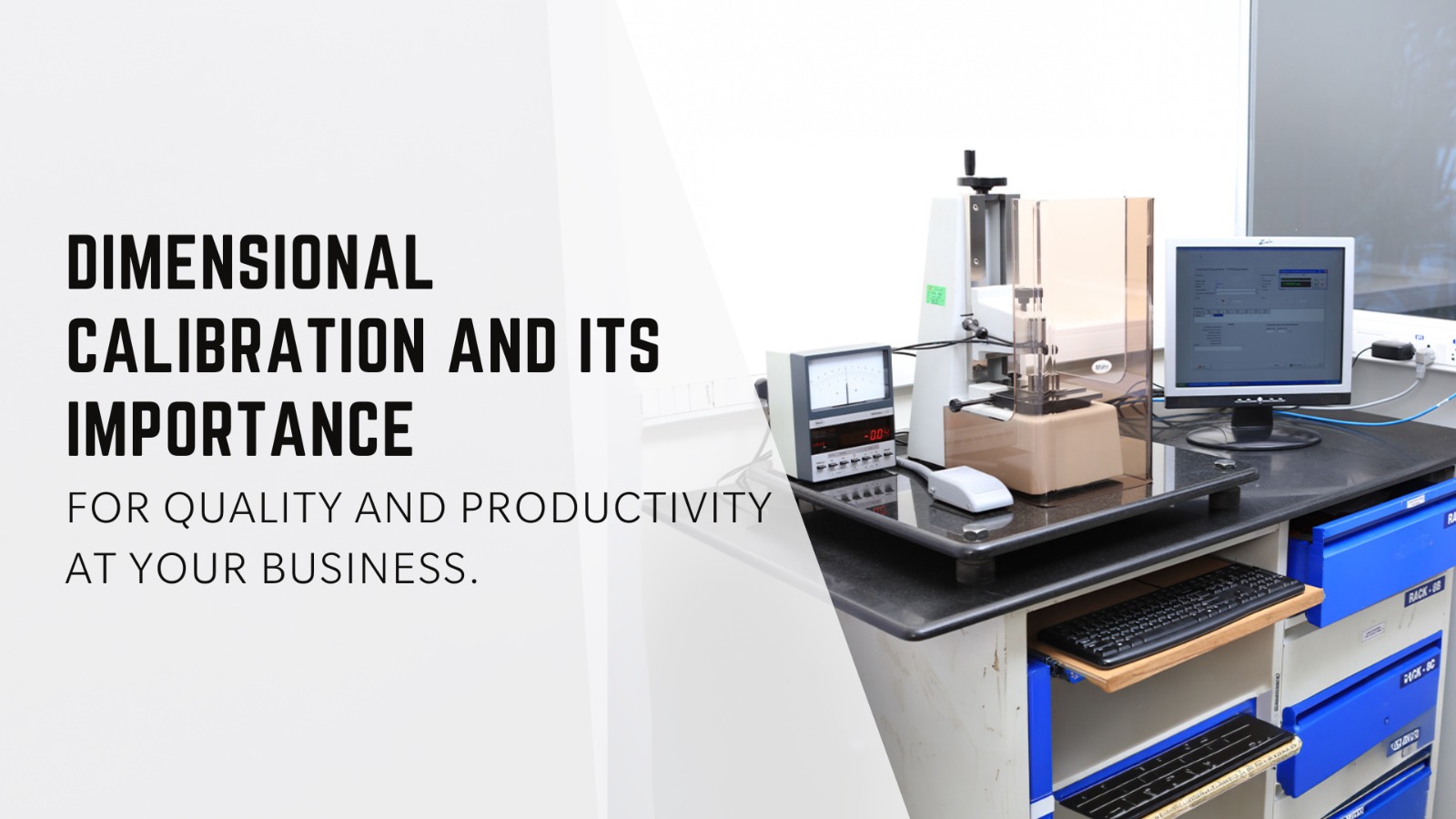
Dimensional Calibration is extremely important in many different industries to assure that the equipment and tools that are used for measuring and monitoring quality are functioning accurately and properly. Dimensional Calibration will help to ensure that a manufacturer can provide improved results with superior quality and that they will meet all applicable specifications. However, many business executives may not be aware of what dimensional calibration is and how to effectively implement it within their organization. This article will answer questions such as: What exactly is dimensional calibration? What are the procedures related to dimensional calibration? Why is dimensional calibration necessary for your business?
Dimensional calibration is a way of verifying and adjusting the accuracy of measuring instruments or devices used in manufacturing or quality assurance processes. These instruments can include items such as micrometers, calipers, coordinate measuring machines (CMM's), and gauges, which ensure that there are precise measurements obtained during the production of various components. The objective of dimensional calibration is to ensure that these instruments measure to the highest level of accuracy possible according to pre-established standards.
In essence, dimensional calibration is about making sure that the measurements taken by these tools meet international standards and have tolerances that are established by specific industries.
Businesses and industries in almost every industry that has to deal with dimensional measurements must rely on dimensional calibration to ensure they can continue to produce high-quality products and ensure smooth operations and efficiency. Dimensional calibration is essential for several reasons, including:
Quality control and consistency:
Accurate dimensional measurements are necessary for ensuring that your products are manufactured and meet the required standards. Even a small variation in measurements can make a component unsuitable for use or cause malfunctions.
Compliance with standards:
Many industries need to comply with strict quality standards. Using calibration services can help your business meet these standards and avoid problems.
Cost-efficiency:
Calibration can help to eliminate unnecessary reworks, waste, and scrap. If the calibration of a tool is incorrect or not performed at all, this can result in the tool providing inaccurate readings, which can lead to the manufacture of faulty components. This, in turn, can increase costs in the form of returns, repairs, and reputational damage.
Improved efficiency:
Calibration can increase the efficiency of your business operations, as tools that provide accurate measurements allow you to spend less time checking results, reducing downtime and errors.
Safety:
In some industries, such as aviation and medical device manufacturing, calibration is important for safety. In these fields, incorrect dimensions can lead to life-threatening situations. By ensuring your measurements are correct and within tolerance, you can also help keep your products safe.
The process of dimensional calibration consists of several steps, each of which is crucial for ensuring that the instruments used for measurements are providing accurate results:
Calibration standards:
First, the appropriate calibration standards must be selected based on the required industry regulations and that meet the measurement precision required for the job.
Instrument setup and adjustment:
The measuring instrument is then compared to the standards, and the difference between the measurement and standard is determined. Based on that information, the instrument is adjusted so it is aligned with the calibration standard.
Verification:
The instrument is verified and checked after adjustments to ensure it now works within the set tolerances. Calibration certificates are also produced to serve as evidence that the tool has been correctly calibrated.
Periodic calibration:
Calibration is not a one-time process and should be performed regularly to account for any drift and wear and tear that might have occurred over time. Instruments should be calibrated based on their usage frequency and measurement criticality.
Dimensional calibration directly impacts your ability to provide high-quality and consistent results within the required time. The effects of dimensional calibration and not having that on your profits and revenue are the following:
Fewer defects:
Correctly calibrated tools allow reducing the risk of producing defective products, which in turn reduces the amount of rework, waste, and scrap.
Customer satisfaction:
Customers are more likely to buy products that meet the requirements and standards, which increases customer satisfaction and the likelihood of repeat purchases.
Competitive advantage:
Businesses that use dimensional calibration are more likely to have a better reputation for quality and precision than those that do not use the process.
Dimensional calibration is a process that can be highly beneficial for any business that needs to rely on accurate dimensional measurements to ensure its operations and products are of high quality. Dimensional calibration can also help a company save time and money, by reducing defects and allowing them to maintain a reputation for quality and reliability in their industry.
Dimensional calibration can also help your business maintain a competitive advantage and increase customer satisfaction and loyalty, as customers will be more likely to choose your products over those of competitors that are less precise.
What is the purpose of dimensional calibration?
Dimensional calibration ensures that tools and equipment provide accurate and reliable measurements, so that products can be made with the required quality and in compliance with industry standards.
How often should dimensional calibration be done?
The frequency of dimensional calibration depends on the tool’s frequency of use and the industry-specific standards. Calibration is generally done periodically to ensure that the measurements remain within tolerance.
What is the difference between calibration and verification?
Calibration is the process of adjusting a measuring tool so that its measurements are in line with the standard. Verification is the process of checking that the tool’s measurements are within tolerance.
Why are calibration services important?
Calibration services can ensure that your instruments are accurately calibrated and maintained to the highest quality standards. They also help your business meet any industry or regulatory requirements that may be in place.
