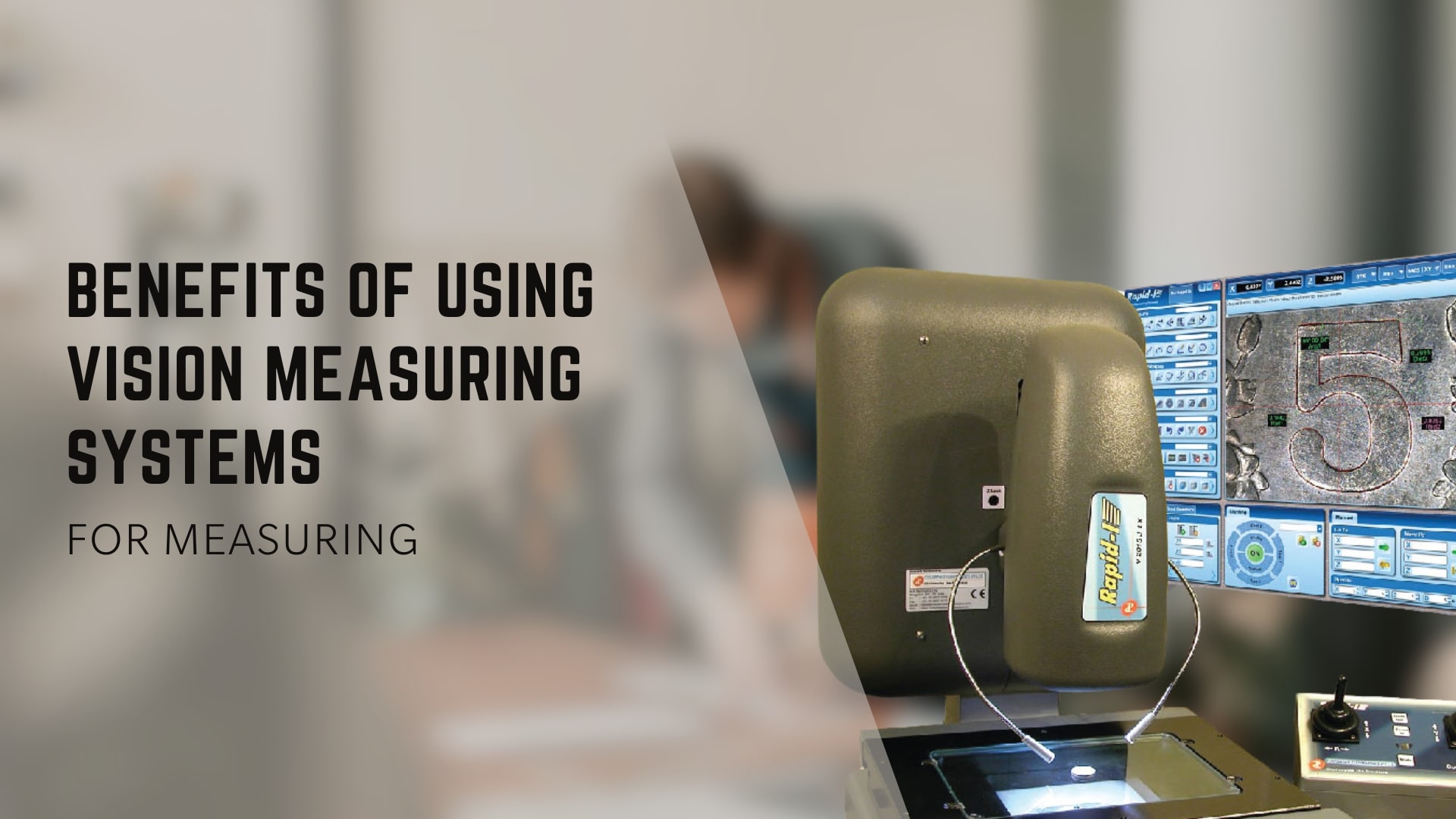
In today's fast-paced manufacturing environment, precision and accuracy are paramount. Companies across various industries are increasingly adopting Vision Measuring Systems to streamline their inspection processes. These advanced tools offer several advantages over traditional measuring techniques, from improving product quality to reducing human error. In this blog, we will explore the significant benefits of using Vision Measuring Systems for inspection services and how they contribute to enhancing the overall precision measurement process.
Vision Measuring Systems (VMS) are advanced technologies that allow manufacturers to non-contiguously measure parts and components through the use of high-quality digital cameras and optical sensors, as well as advanced computer software. Compared to traditional methods of measuring a part or component, VMS has a distinct advantage when it comes to measuring very delicate or sensitive components because of the fact that when using traditional methods of measurement, the measuring probe will likely damage or cause the part to be rendered unusable due to contact with the measuring probe.
1) Increased Accuracy of Measurement:
The VMS provides highly accurate measurements using optical sensors and advanced algorithms to measure objects with great precision, typically to the micrometer level. Regardless of whether measuring dimensions, angles, or contours, the VMS guarantees high-quality precision. The ability to take accurate measurements is essential in the aerospace, automotive, and electronic manufacturing industries; even a small variation can result in the production of defective products, which can be extremely costly.
2) Non-Contact Method for Measuring Sensitive Components:
In many cases, traditional methods of measurement require contact to obtain accurate readings. This process could cause damage to sensitive or delicate components. By using light-based sensors and cameras to gather measurements, the VMS does not require any contact between the equipment and the part. Because of the lack of mechanical force applied to the part, there is no risk of altering or compromising the integrity of the part during the inspection process.
3) Faster Inspection Processes
VMS Inspection Systems can ultimately accelerate the inspection process. VMSs complete the collection of all required measurements at once. Through automation and accuracy, VMS systems have decreased the amount of time required for inspection, therefore enhancing high-volume production efficiency and assisting in the ability to meet needs for time-sensitive or expedited deliveries with adherence to strict quality standards.
4.) Enhanced Consistency and Reproducibility
Vision Measuring System technology virtually eliminates the risk, as there is extreme repeatability between two measurements collected at the same time via VMS systems. As such, measurements from VMS are also repetitive therefore produce extreme model consistency; therefore, the VMS provides significant added benefit during a quality control process and the establishment of product quality criteria, while also reducing variability in final products prior to shipment as well as providing assurance to end customers that the product has matched pre-determined quality standards upon receipt of the product; thus, providing complete confidence that they have received products that meet their expectations based upon the Standards of Quality that the product has met.
5) Real-Time Data Analysis and Reporting
When advanced software is integrated with vision measuring systems, operators can perform the analysis and generate reports in real-time. This allows operators to immediately identify any discrepancies or defects in any part of the inspection process and take appropriate corrective action prior to allowing defective products to continue to the next step in production. Whenever real-time reports are generated, the operator can maintain accurate documentation for compliance with industry standards and to provide sufficient traceability of products, such as in the pharmaceutical and automotive industries.
6) Versatility Across Different Industries
Vision measuring systems are even more versatile than many industries realize. Vision measuring systems are used in a wide variety of industries. These measurement systems are capable of measuring virtually any type of material or component, from the automotive industry to the medical device industry. Vision measuring systems can handle all sorts of measurements, whether it is for a detailed electronic part or a huge mechanical component. Due to their flexibility, these systems are often the best choice for companies looking to improve efficiency and streamline their inspection process.
Generally, Vision Measurement Systems work by taking a series of images of the part being measured and then using the image data along with specialized software to process the information collected from the camera. A typical VMS system includes a high-definition camera or sensor as a light source to illuminate the object. The high-definition camera or sensor takes images/scans of the object. After the camera takes these images/scans, the system software processes those images/scans by comparing them to the company's established standards/specifications, and then performs all necessary measurement calculations. Any deviation from the acceptable specification is identified/flagged by the Vision Measurement System. The Vision Measurement System may have other options available, including automated calibration, edge detection, three-dimensional scanning, etc.
What is the main advantage of Vision Measuring Systems?
The primary advantage of Vision Measuring Systems is their ability to perform high-precision measurements without physical contact, which reduces the risk of damaging delicate components. This feature is particularly valuable for industries that require strict quality control.
How accurate are Vision Measuring Systems?
Vision Measuring Systems offer micrometer-level accuracy, making them suitable for industries that demand extremely precise measurements. Depending on the system, they can measure with tolerances as small as a few micrometers.
How does Non-Contact Measurement improve inspection?
Non-contact measurement eliminates the risk of damaging delicate or soft materials during the inspection process. By using light-based sensors instead of physical probes, Vision Measuring Systems provide a more efficient and reliable way to inspect sensitive components.
At Roots Metrology, we are proud to offer state-of-the-art Vision Measuring Systems that provide accurate, reliable, and efficient inspection services for a wide range of industries. Our advanced VMS technology ensures precision measurement and non-contact measurement capabilities, helping businesses achieve the highest quality standards while optimizing production efficiency. Whether you're in the automotive, aerospace, electronics, or medical device industry, our Vision Measuring Systems are designed to meet your specific inspection needs. Trust Roots Metrology for all your measurement and inspection requirements—ensuring that your products meet the most stringent quality control standards every time.
