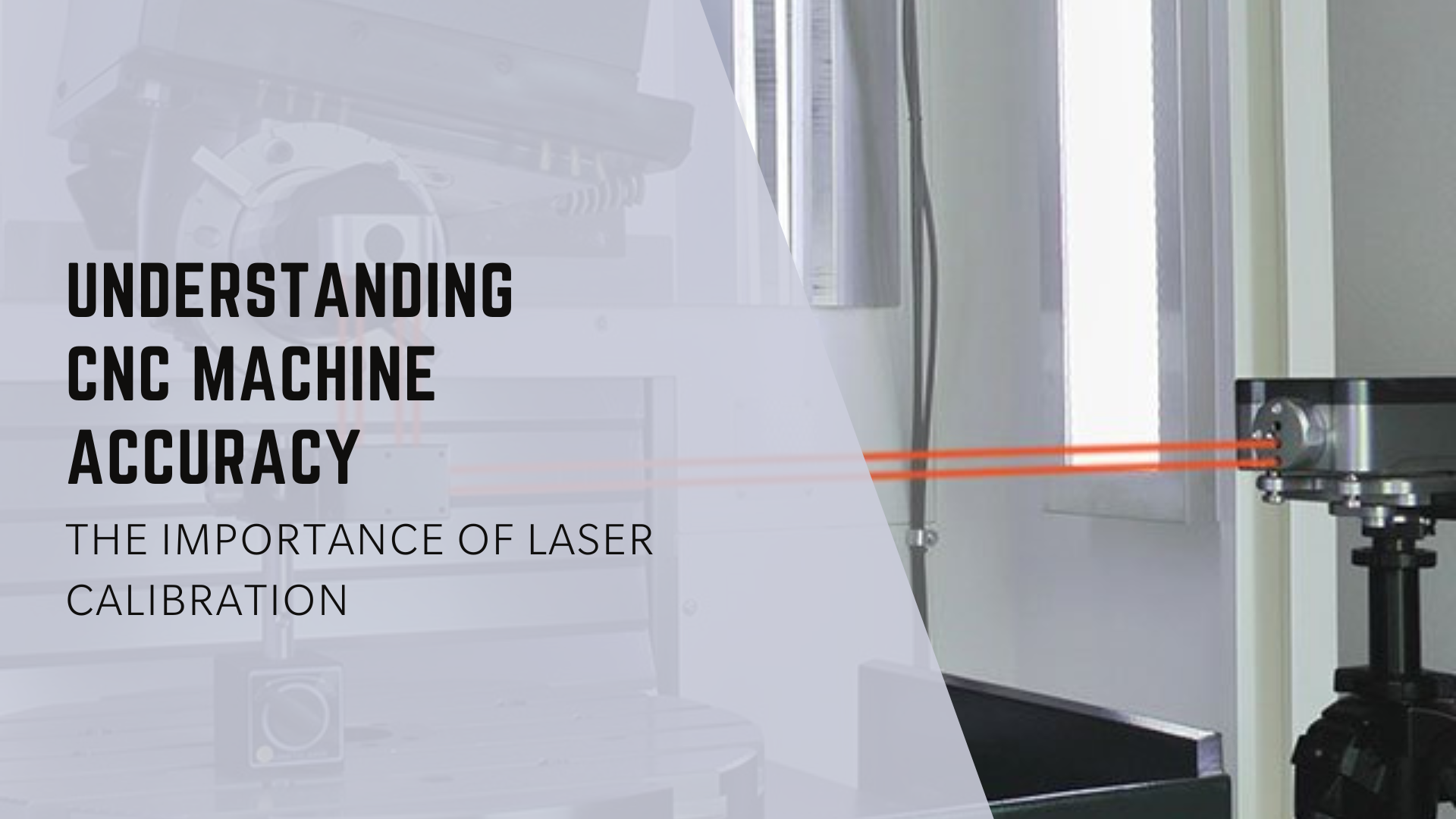
CNC Machines make up an important component of Industrial Manufacturing, where they allow us to manufacture Parts with extreme precision and complexity. These CNC Machines are also subject to the same environmental factors that affect Manufacturing Equipment; therefore, it is critical to maintain these products at their highest potential for accuracy. The primary reason why we Laser Calibrate CNC Machines is to identify and correct problems that affect CNC Machines’ accuracy capabilities (i.e., to properly calibrate your CNC machines).
In this article, we will explore the reasons why Laser Calibration is necessary on CNC Machines, including topics such as Precision Mapping, Backlash, and Straightness. Having a better understanding of the necessity of Laser Calibration will help Companies realize higher levels of performance from their CNC Machines, by reducing the amount of downtime and providing superior Quality Products to Customers.
Laser Calibration utilizes a very precise method for measurement and correction of any positional or geometric error occurring in (or affecting) CNC Machines. A Laser Calibration system measures the CNC Machine's accuracy in near real-time (e.g., with a 12-second delay). Therefore, Laser Calibration is unique; it allows Operators to see their machine's accuracy and quickly identify any deviations in Linear Positioning, Angular Misalignment, or Straightness.
Laser Calibration aims to ensure that the CNC machine's movements are as close to the machine's actual intended movements as possible for the purpose of precision and consistency. Calibrating CNC machines is important for maintaining peak levels of performance and avoiding the potential for producing defective products, wearing down machines faster and increasing maintenance expenditures of the equipment.
Key Components Measured During Laser Calibration:
Linear Positioning Accuracy:
The most significant factor in Laser Calibration is verifying that a CNC machine is moving correctly according to its programming. A CNC machine's accuracy will decrease if it does not follow its programmed movement path accurately, which in turn will produce inaccurate machining, which will decrease the quality and precision of the machined product. The deviation from the programmed movement path is measured with the Laser Calibration process to adjust the machine's accuracy along each axis.
Repeatability:
Repeatability measures the accuracy of returning to the same position. The slightest error in repeatability can create serious issues within a factory that produces products in high volumes. With Laser Calibration, adjustments are made to errors in repeatability, so CNC machines maintain their ability to produce consistent, accurate parts, which ultimately improves overall efficiency of operation.
Backlash:
The unintentional motion caused by a change in the direction of motion is referred to as "backlash." Backlash is a major source of uncertainty in machining processes and is especially problematic in applications where accuracy is critical. By Laser Calibrating the CNC machine, one can pinpoint the location and cause(s) of the Backlash and then correct the machine's motion to avoid this mistake. This results in improved accuracy and finished parts (while achieving a greater smoothness) during operation.
Straightness and Squareness:
Errors in straightness and squareness occur as a result of misalignment between the various components of a CNC machine (e.g., the spindle, table, etc.). This misalignment has the potential to degrade the performance of a CNC machine by resulting in a lack of machining accuracy and the creation of defective parts. Laser calibration will identify the location of the misalignment(s) and implement the necessary corrections to either make adjustments to the machine or through the re-installation of its base or foundation to ensure that the machine's components are properly aligned.
Yaw, Pitch, and Roll:
An angular deviation of the CNC machine's components is caused by Yaw, Pitch, and Roll errors. Although they are generally minor, they can significantly affect machining accuracy during complex machining operations. By Laser calibrating, we identify and correct any angular misalignment to ensure that the CNC Machine continues to operate at its intended angle.
Laser Calibration plays a vital role in maintaining the accuracy and efficiency of CNC machines. Let’s explore some key reasons why this calibration method is essential for businesses relying on CNC machinery.
Ensures Precision Mapping:
Through Precision Mapping, Laser Calibration identifies and measures the machine movement along all machine axes. The Precision Mapping Data gives operators the specific location of the machine and allows operators to find incorrect positioning that could occur. By identifying and correcting machine positioning abnormalities, Laser Calibration prevents mistakes while machining, and therefore produces the highest possible precision finished parts.
Reduces Machine Downtime:
Through early identification of laser calibration errors, Laser Calibration minimizes CNC machine failures and improper machine processes. If CNC machines are improperly aligned, they will have performance defects that may prevent production or stop production. Regular calibration improves the likelihood that any CNC machine performance problems will be caught before they are allowed to escalate and/or become too costly; thus, saving time and money.
Improves Product Quality:
CNC Machines that use Laser Calibration produce higher-quality products because they are calibrated accurately. When CNC Machines are accurately calibrated with a Laser Calibration machine, they will manufac
ture parts that meet tight tolerances and meet high-quality standards. This is particularly important in the Aerospace, Automotive and Medical Device industries, where accuracy is paramount.Increases CNC Machine Lifespan:
An ongoing process of Laser Calibration will maintain CNC Machining within its pre-determined limits, creating increased longevity for CNC Machining parts as well as reduced component wear by preventing the loss of tension or accuracy. A better-calibrated CNC Machine will also last longer before being required to have any type of maintenance, repair or replacement of parts, resulting in lower operating costs, increasing the life expectancy of the machine.
Optimizes Efficiency:
Laser Calibration helps maximize potential productivity by providing accurate and consistent calibration of the CNC Machine for optimal performance. Because of the improved accuracy of the CNC Machine, Laser Calibration has the ability to help eliminate inaccuracies and decrease the amount of time and money spent on parts that must be produced a second time, or “reworked,” resulting in quicker production cycles and lower costs overall.
Preparation:
The first step in the Laser Calibration process is to ensure that the CNC machine is properly set up. This involves checking for proper machine alignment and ensuring that the work area is clear.
Laser Measurement:
A laser system is placed on the machine to measure its movements. The laser will track the movement of the machine along various axes, recording data that indicates any misalignments or errors.
Data Analysis:
Once the laser system has collected the data, it is analyzed to identify any errors in the machine's positioning, straightness, or angular alignment. The results of this analysis will determine the necessary adjustments.
Adjustment and Correction:
Based on the results of the data analysis, adjustments are made to the CNC machine to correct any errors. These adjustments may involve repositioning components, recalibrating the machine’s axes, or correcting any backlash or misalignment issues.Verification:
After the adjustments are made, the laser system is used once again to verify that the machine is operating correctly. This ensures that all errors have been corrected and the machine is now operating at optimal performance.
How often should Laser Calibration be performed on CNC machines?
The frequency of Laser Calibration depends on the machine's usage and the precision required for the tasks being performed. For high-precision industries, it is recommended to perform calibration at least once every six months. However, machines that are used for heavy-duty tasks or in high-volume production should be calibrated more frequently.
Can Laser Calibration fix all types of errors in CNC machines?
While Laser Calibration is highly effective in detecting and correcting positional errors, it cannot address all types of mechanical or electrical issues. It is primarily used to improve CNC machine accuracy by addressing errors such as backlash, straightness, and angular misalignments. For other issues, additional diagnostics or repairs may be required.
What industries benefit the most from Laser Calibration of CNC machines?
Industries that rely on high-precision machining, such as aerospace, automotive, and medical device manufacturing, benefit the most from Laser Calibration. These industries require CNC machines to produce parts with extremely tight tolerances and high-quality standards.
Is Laser Calibration a complex process?
The process of Laser Calibration requires specialized equipment and technical expertise. While the process itself is straightforward, it should be performed by qualified professionals to ensure the accuracy of the results.
For many companies that rely on precision CNC Machining, maintaining CNC Machining accuracy is extremely important. Laser Calibration will assist in the identification and correction of errors caused by improper calibration of the CNC Machine and will ensure that the CNC Machine is operating within its specified tolerance range. When companies address areas of CNC Machining performance that will directly impact the quality and delivery of their goods, such as “Backlash,” “Straightness,” and “Precision Mapping,” they will improve the quality of products manufactured and reduce downtime associated with quality problems and increase the life of CNC Machines. If you desire to obtain optimum performance and precision on your CNC Machining equipment, then implementing Laser Calibration as part of your regular Maintenance Schedule will be essential.
