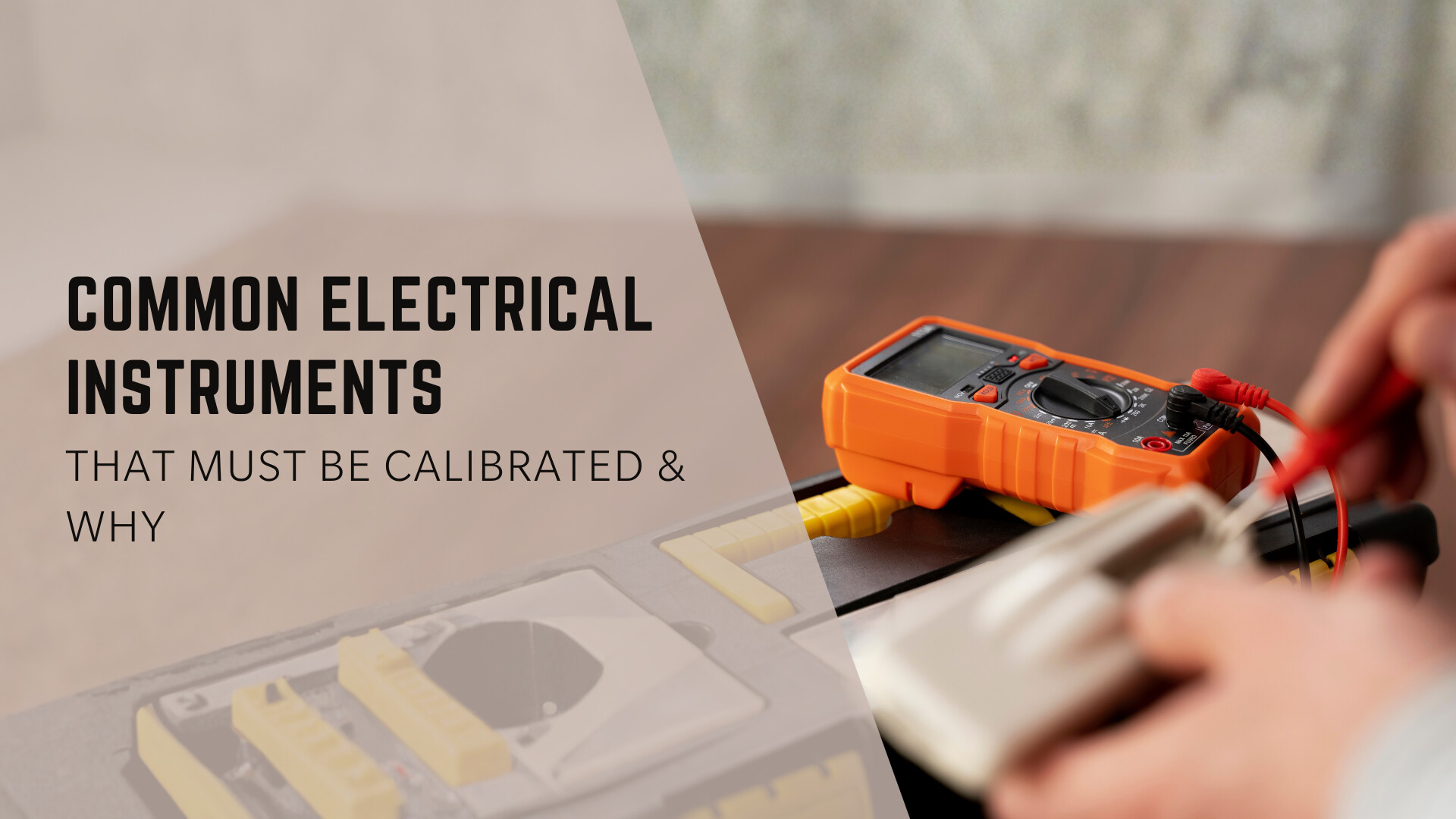
In today’s fast-paced and highly regulated industries, precision and reliability are paramount. From manufacturing plants to laboratories, electrical calibration plays a critical role in ensuring that your instruments perform within the specified tolerances. Whether it's ensuring the accuracy of your equipment in a calibration lab or performing on-site calibration, understanding which instruments require regular calibration is crucial to maintaining high-quality operations.
Electrical calibration ensures that electrical instruments used in various processes remain accurate, consistent, and compliant with industry standards. In this article, we’ll explore some of the most common electrical instruments that need to be calibrated, why this calibration is necessary, and how it contributes to better performance across multiple sectors.
Electrical calibration ensures that your electrical instruments are calibrated to factory specifications or within industry standards. Instruments can become miscalibrated over time from a number of different environmental and physical factors. Temperature changes, physical damage, and mechanical shock can cause your electrical instruments to provide inaccurate measurements.
Electrical calibration is important because it:
Ensuring your electrical instruments are accurate and safe is critical. Here is a list of the most common electrical instruments that need electrical calibration.
1. Multimeters
Multimeters are some of the most common electrical instruments as they measure volts, amps, and ohms. If your multimeter is providing incorrect readings, you may not be fixing problems, providing safe electricity, or using the right materials.
2. Oscilloscopes
Oscilloscopes are used to measure electrical signals. During electrical calibration, we ensure your electrical signals provide an accurate reading. This is important to ensure technicians are provided with the right information to analyze.
3. Power Analyzers
Power analyzers are another important electrical instrument as they read electrical consumption. If your readings are off, you may be losing money by providing too much power or risk damaging your equipment by providing too little
4. Voltage Sources and Current Sources
Voltage sources and current sources are used to provide a fixed voltage or current when testing other instruments. Ensuring these read accurately helps you test the accuracy of other components.
5. Frequency Counters
Frequency counters are used to measure the frequency in an electrical signal. Providing the right frequency is important for many industries. Engineers use frequency to test many processes
6. Thermometers and Temperature Probes
Temperature probes and thermometers should be calibrated to ensure accurate temperature readings. Some products require specific temperatures to safely produce quality goods. If you work in the pharmaceutical or food production industries, temperature probes should be calibrated regularly.
7. Clamp Meters
Clamp meters are used to measure current in live wires without physical contact. Clamp meters are useful for industries that require measuring current in live environments. Make sure your technicians are provided with accurate data by calibrating your clamp meters.
8. Insulation Resistance Testers
Insulation resistance testers are used to test the integrity of insulation on electrical cords and containers. If the insulation becomes damaged, you can be putting your equipment and employees at risk. Regular electrical calibration can detect when your insulation is becoming weak.
9. Digital and Analog Signal Generators
Signal generators are used to create electrical signals that can be used to test other electrical instruments. Electrical calibration on digital and analog signal generators ensures that your other electrical equipment is working properly.
10. Digital Voltmeters
Digital voltmeters are used to test the potential difference between two points in an electrical circuit. Digital voltmeters should be calibrated to ensure accurate readings.
Partnering with a professional calibration lab like Roots Metrology is the easiest way to make sure your electrical instruments are calibrated properly. Why should you use calibration services?
Make sure your electrical instruments are safe and accurate with electrical calibration. At Roots Metrology, we can calibrate many different electrical instruments for your business. Electrical calibration services help you ensure your instruments are providing accurate data and stay in compliance with industry standards. Don’t take the risk of trying to calibrate your instruments yourself. Leave it to the professionals. Schedule service today.
